

Understanding how dk380c4.0-h8 model size works can feel confusing at first, especially if you’re not deeply familiar with technical models, hardware frameworks, or modular system design. The keyword itself sounds complex, and honestly, that’s because the model represents a highly structured, performance-focused configuration where size plays a critical role in efficiency, compatibility, and scalability.
- What Is the DK380C4.0-H8 Model?
- Why Model Size Matters in DK380C4.0-H8
- Breaking Down the How DK380C4.0-H8 Model SizeStructure
- How to Measure How DK380C4.0-H8 Model Size Correctly
- Performance vs Size: Finding the Right Balance
- Use Cases That Depend on DK380C4.0-H8 Model Size
- Common Misconceptions About DK380C4.0-H8 Model Size
- How Experts Decide If DK380C4.0-H8 Is the Right Size
- Final Thoughts on How DK380C4.0-H8 Model Size Works
- You May Also Read
In this guide, we’ll break everything down in plain English. You’ll learn what the DK380C4.0-H8 model actually is, why its size matters, how to evaluate it properly, and how professionals decide whether this How DK380C4.0-H8 Model Size is the right fit for a specific use case. The goal is simple: clarity without oversimplification.
What Is the DK380C4.0-H8 Model?
Before diving into how dk380c4.0-h8 model size functions, it’s important to understand what the model itself represents. The DK380C4.0-H8 is best described as a structured modular model designed for performance-oriented environments. Whether used in industrial systems, computational frameworks, or specialized hardware layouts, it follows a precise naming logic that reveals its capabilities.
The “DK380” portion typically refers to the core architecture or series, indicating a certain performance class. The “C4.0” often signals a generation or configuration level, while “H8” commonly points to a high-capacity or enhanced variant. Together, these elements define not just what the model can do, but also how large and resource-intensive it is.
Understanding the model’s background helps make sense of why size is such a critical factor. This isn’t just about physical dimensions—it’s about functional scale, efficiency, and integration potential.
Why Model Size Matters in DK380C4.0-H8
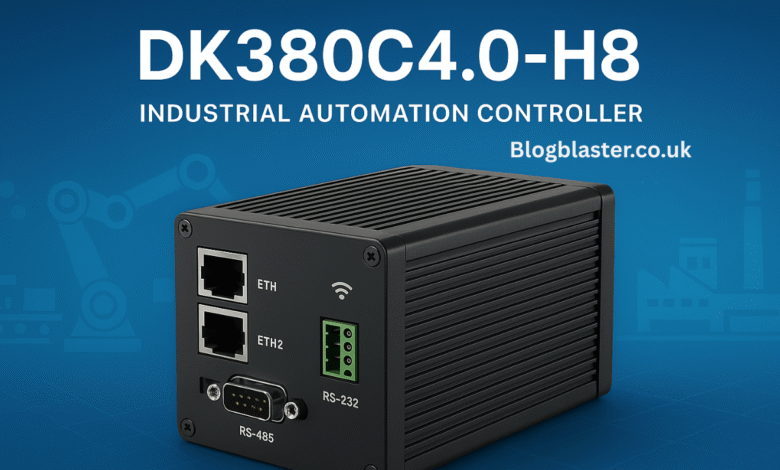
When people search for how dk380c4.0-h8 model size, they’re usually trying to answer one question: Will this fit my system and my needs? And that’s a smart question to ask.
Model size directly affects performance output, power consumption, compatibility, and future scalability. A larger model often provides better throughput and stability but may require more resources to operate efficiently. On the other hand, a compact configuration might save space and energy but limit expansion options.
In professional environments, size also influences cooling requirements, installation complexity, and maintenance costs. Choosing the wrong size can lead to bottlenecks, wasted resources, or even system instability. That’s why understanding size is not optional—it’s essential.
Breaking Down the How DK380C4.0-H8 Model SizeStructure
To truly understand how dk380c4.0-h8 model size is defined, you need to look at it in layers rather than as a single measurement. This model’s size is best understood through three main dimensions: physical, functional, and operational.
First, the physical dimension includes width, height, depth, and overall footprint. This determines whether the model fits into a specific enclosure, rack, or deployment environment. Even small differences in size can affect airflow and installation options.
Second, the functional size refers to processing capacity, internal modules, and component density. Two models may look similar externally but differ drastically in what they can handle internally.
Finally, operational size reflects how much power, memory, and cooling capacity the model requires during real-world use. This is where theoretical size meets practical performance.
How to Measure How DK380C4.0-H8 Model Size Correctly
A common mistake people make when researching how dk380c4.0-h8 model size is relying on a single specification. Accurate evaluation requires a more complete approach.
Start with the official technical documentation. This usually lists exact dimensions, supported configurations, and expansion limits. These numbers give you a baseline, but they don’t tell the whole story.
Next, consider real-world usage scenarios. A model running at maximum capacity may effectively “behave” larger than its physical size suggests because of additional cooling systems, power units, or peripheral components.
Lastly, think long-term. Model size isn’t just about today’s needs—it’s about whether the DK380C4.0-H8 can grow with your system without requiring a full replacement later.
Performance vs Size: Finding the Right Balance
One of the most important discussions around how dk380c4.0-h8 model size is the balance between size and performance. Bigger is not always better, and smaller is not always smarter.
The DK380C4.0-H8 model is designed to sit in a sweet spot—large enough to deliver consistent high performance, but optimized to avoid unnecessary bulk. This makes it attractive for users who want reliability without overengineering.
Professionals often evaluate this balance by looking at performance-per-unit-size. If a model delivers strong output while maintaining manageable dimensions, it’s considered highly efficient. The DK380C4.0-H8 tends to score well in this area, which explains its popularity.
Use Cases That Depend on DK380C4.0-H8 Model Size
Different applications place different demands on size, which is why understanding how dk380c4.0-h8 model size applies to your specific use case is critical.
In industrial environments, size often determines whether the model can be integrated into existing systems without major redesigns. A compact yet powerful model like DK380C4.0-H8 is often favored in such cases.
In high-performance computing or advanced technical setups, size affects parallel processing capabilities and heat management. The H8 variant is particularly suited for workloads that require sustained performance without frequent downtime.
For scalable systems, the model size also impacts how easily additional units can be deployed alongside existing ones.
Common Misconceptions About DK380C4.0-H8 Model Size
There are several myths floating around about how dk380c4.0-h8 model size works, and clearing them up can save you a lot of trouble.
One common misconception is that the model size is fixed and non-configurable. In reality, the DK380C4.0-H8 supports multiple internal configurations that can significantly affect its effective size and capability.
Another misunderstanding is that size automatically equals complexity. While larger models can be more complex, the DK380C4.0-H8 is designed with modular simplicity in mind, making it easier to manage than many smaller but poorly optimized alternatives.
Finally, some assume that upgrading always means increasing size. In many cases, smarter configuration choices allow better performance without any physical expansion at all.
How Experts Decide If DK380C4.0-H8 Is the Right Size
Experts evaluating how dk380c4.0-h8 model size don’t just look at specs—they look at context. They ask questions like: What is the workload? How critical is uptime? How much room is available for expansion?
They also consider environmental factors such as temperature, power stability, and maintenance access. A model that fits perfectly on paper may fail in real-world conditions if these factors are ignored.
Ultimately, experts choose the DK380C4.0-H8 when they need a balanced, future-ready model size that delivers performance without unnecessary overhead.
Final Thoughts on How DK380C4.0-H8 Model Size Works
By now, you should have a clear and confident understanding of how dk380c4.0-h8 model size functions and why it matters. This model is not just about dimensions—it’s about efficiency, adaptability, and smart design.
Whether you’re a beginner trying to understand the basics or an advanced user planning a scalable system, the DK380C4.0-H8 offers a well-thought-out size profile that works across multiple scenarios.
The key takeaway is simple: choosing the right model size isn’t about going big or small—it’s about going right. And when evaluated properly, the DK380C4.0-H8 often proves to be exactly that.
